Climbing Kilimanjaro
What It Really Takes to Reach the Roof of Africa
Climbing Mount Kilimanjaro is equal parts exhilarating, intimidating, and deeply inspiring. But how do you begin planning a journey that takes you nearly 20,000 feet above sea level?
In 2018, Avenue Two Travel CEO Josh Bush climbed Kilimanjaro’s Machame Route with Abercrombie & Kent. We sat down with him to talk about the preparation, the experience on the mountain, and the unforgettable final push to the summit.
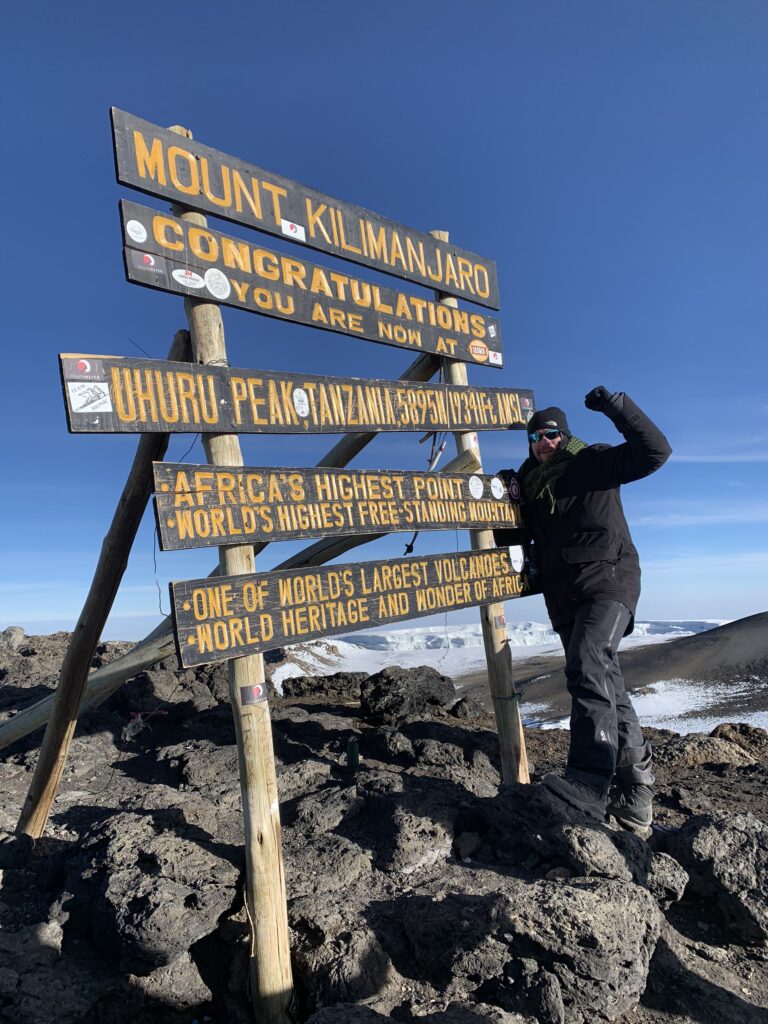
Climbing Mount Kilimanjaro can feel overwhelming. Where do you even begin?
The first—and most important—step is choosing the right partner in Tanzania. You need an experienced team to guide you through every part of the journey: what to do before you leave, what to expect on the mountain, and how to plan the rest of your time in Africa.
Avenue Two advisors have access to some of the best partners in the region. They provide the detailed preparation, local expertise, and on-the-ground support that can make all the difference in the success of your climb.
You traveled with Abercrombie & Kent. Why choose a highend tour operator for this kind of trip?
Climbing Kilimanjaro is a physically demanding experience, and this is one of those journeys where the quality of your team truly matters.
Traveling with an experienced luxury operator such as Abercrombie & Kent gives you access to exceptional guides and porters, a carefully planned approach to acclimatization, and a greater level of comfort throughout the climb. Some of the guides and porters climb Kilimanjaro three or four times a month. Their knowledge of the mountain—and their ability to recognize what each climber needs—is invaluable.
What is the typical group size for a private climb?
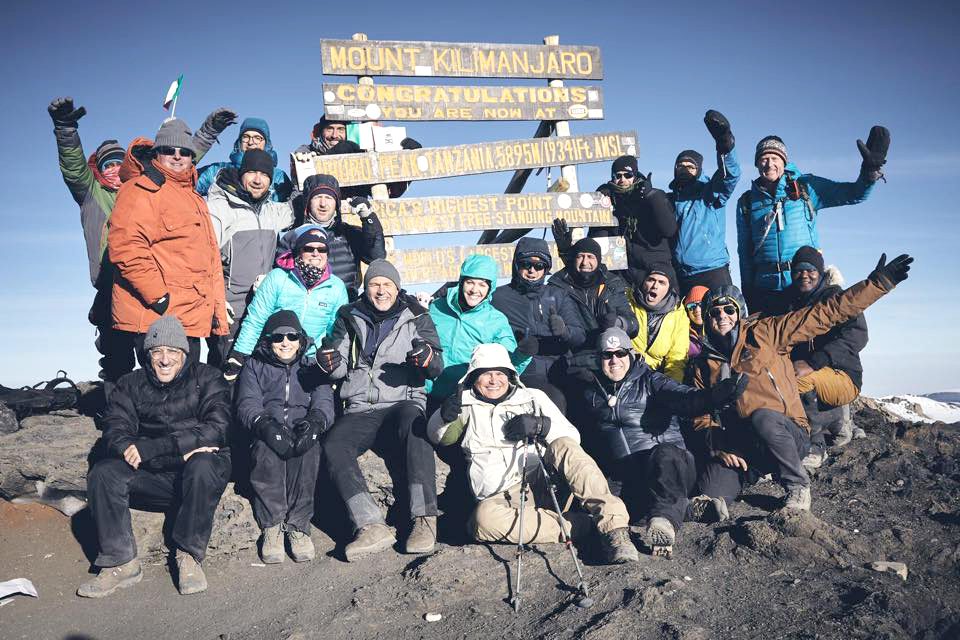
We have seen clients climb solo and in private groups of up to 10 people. My climb included 19 people, which is larger than the norm.
There is no single “right” group size. It depends on whether you want the camaraderie of sharing the experience with friends or prefer a more personal climb with individual attention from your guides.
How do you know what gear to bring?
Your tour operator and guides will provide a detailed packing list covering everything you need for the different temperatures, terrain, and elevations you will encounter.
Beyond the essential gear, I recommend bringing a good camera or video device. I would also download music you love to your phone. During the most challenging stretches, having a familiar soundtrack can provide a surprising amount of motivation.
What do you carry while hiking?
You carry a daypack with your personal essentials, including water, extra layers, medications, snacks, cameras, and anything else you may need during the day. You will also use your own trekking poles.
The porters carry the tents, cots, food, cooking equipment, and most of your additional gear. Depending on the arrangements, extra porters may be hired to carry amenities such as private shower and toilet equipment.
The porter team remains with you throughout the journey. They move ahead during the day, set up camp before you arrive, prepare the meals, and take everything down again the following morning. Their work is extraordinary and absolutely essential to the experience.
What are the accommodations like? Are there cabins along the Machame Route?
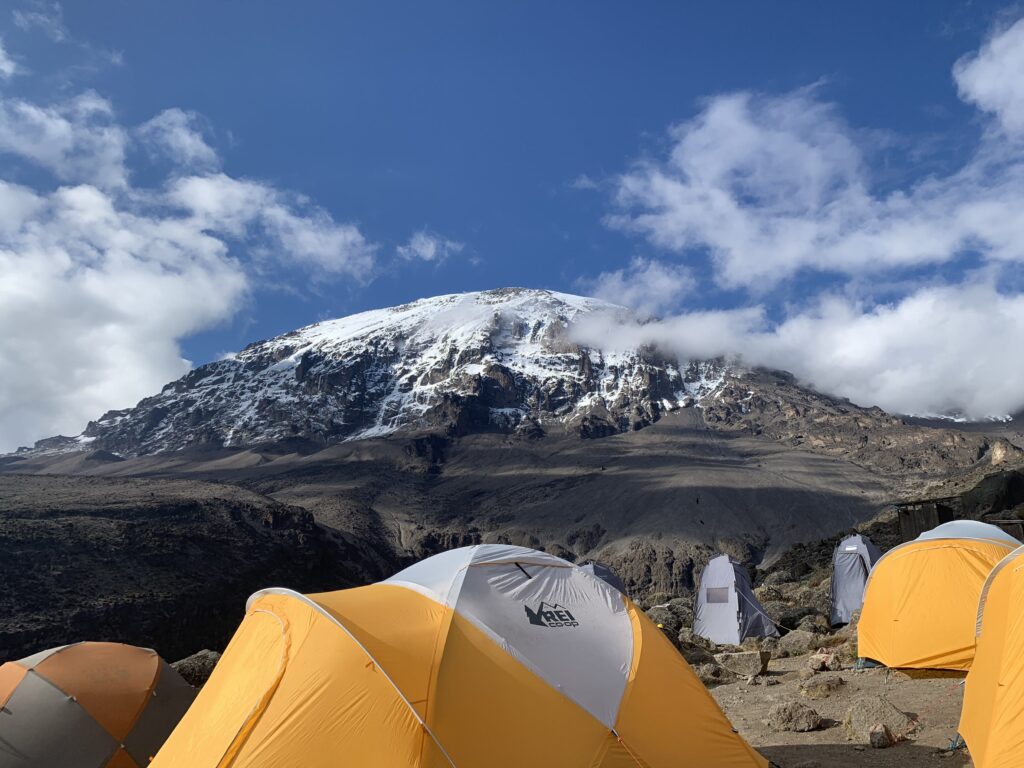
The Machame Route is a camping route, so you sleep in tents throughout the climb.
Our sleeping tents were surprisingly spacious. We could stand up inside them, which made changing clothes much easier and helped keep our sleeping areas relatively free of mud and dust. We slept on cots with sleeping bags rather than directly on the ground, which added a welcome level of comfort.
Meals were served in a separate, even larger dining tent. After spending the day hiking, having a warm, sheltered place to sit together and eat felt like a real luxury.
What is the food like on the mountain?
Considering where we were, the food was excellent. The team handled all the meal planning, preparation, and cooking. Dietary needs can be discussed and accommodated before the climb.
You burn a tremendous number of calories during the all-day hikes, particularly as you reach higher elevations. The guides encourage you to eat well at meals and snack regularly to maintain your energy. Snickers bars were especially popular on our climb.
What should climbers know about altitude and safety?
Safety is one of the most important considerations on Kilimanjaro, and it should be discussed thoroughly before the climb begins.
Altitude affects everyone differently, regardless of age or fitness level. I recommend arriving in Tanzania early enough to adjust to the time difference and settle in before beginning the climb. Travelers should also speak with their physicians about the physical demands of the journey and whether altitude sickness medication may be appropriate.
Because our guides had completed the climb many times, they knew exactly what signs to watch for. They monitored us closely for altitude sickness and dehydration, checked our blood-oxygen levels each evening, and led us through breathing exercises. The itinerary was also carefully paced to help our bodies acclimate gradually as we climbed.
What happens if you feel as though you cannot continue?
This is another reason why having an exceptional guide is so important.
A great guide knows when to encourage you, when to slow the pace, and when to give you the extra push you may need. More importantly, they know how to evaluate whether it is safe for you to continue. They will be honest if they believe you should turn back.
Reaching the summit is the goal, but safety always comes first.
Walk us through the beginning of the climb. What is the first day like?
The journey begins with an overnight stay in Arusha. The following morning, you are picked up for the approximately two-hour drive to Machame Gate, where every climber registers with the national park.
The climb begins at roughly 6,000 feet, and by the first evening you are camping at approximately 10,000 feet.
One of the things that surprised me most was how dramatically the scenery changed from day to day. The first day was incredibly green and lush. As we climbed higher, the vegetation, terrain, and atmosphere continually shifted. It felt as though we were passing through several entirely different worlds on the way to the summit.
How long do you hike each day?
We generally began hiking at around 6:00 a.m. and spent approximately six to seven hours on the trail each day, although the exact timing depended on the terrain and elevation.
Our Machame Route itinerary included five days of climbing to reach the summit, followed by one day of descent.
The pace is intentionally measured. On Kilimanjaro, going slowly is part of the strategy. It allows your body time to adjust to the increasing altitude and gives you the best opportunity to reach the top safely.
We have heard the final ascent begins in the middle of the night. What is summit day really like?
It is true—but it is not quite as crazy as it sounds.
We reached our final camp at approximately 3:00 p.m. We ate dinner and were encouraged to eat as much as possible because the last push to the summit is intense. After a few hours of sleep, we were awakened around midnight to begin climbing.
Yes, it was completely dark. The ground was frozen solid, which actually made it easier to navigate than loose, muddy terrain. We stopped approximately every 90 minutes to drink water, eat a snack, and keep our energy up.
This was where the music helped me. I wore one earbud so I could listen while still hearing my guides and everything happening around me. At one point, our porters began singing to encourage us—and one another—as we climbed.
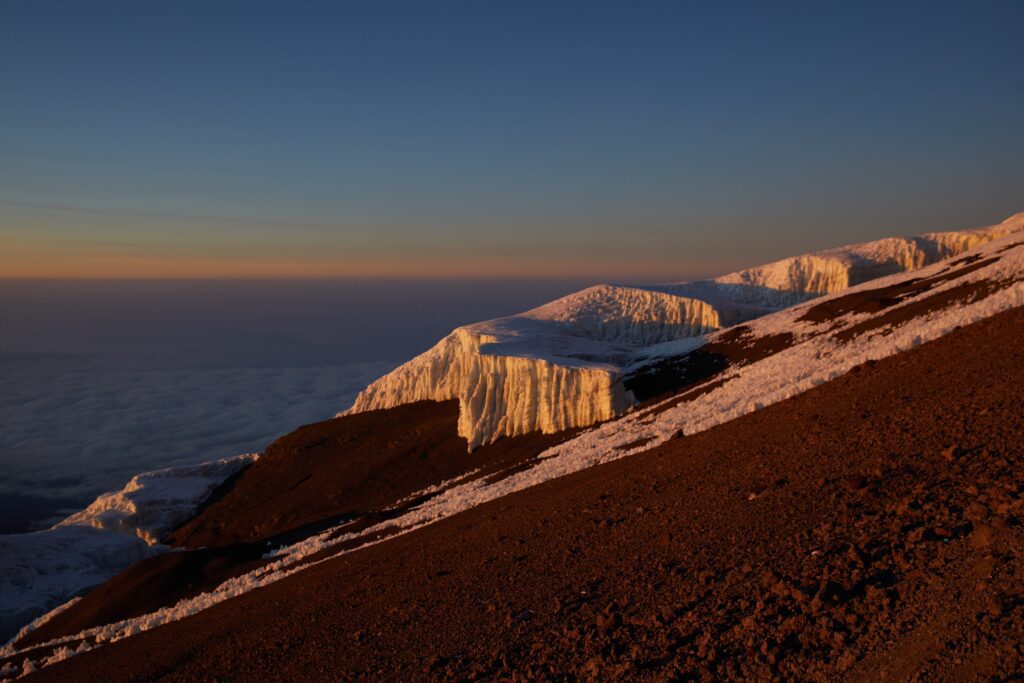
With no light pollution, the stars were incredible. Then, slowly, the black sky began to turn red. We kept moving upward as the sun started to rise, finally reaching the summit in the early-morning light.
There is nothing quite like it.
Watch below and relive this epic climb!
Is Kilimanjaro right for you?
Climbing Kilimanjaro requires preparation, patience, and a willingness to become uncomfortable. It is physically demanding and, at times, mentally challenging. But with the right team surrounding you, it can also be one of the most rewarding experiences of your life.
You do not need to have every detail figured out before you begin. That is where an experienced Avenue Two advisor—and the right partner on the ground—can help. From selecting the best route and pacing to arranging the proper guides, equipment, accommodations, and pre- or post-climb safari, thoughtful planning allows you to focus on the reason you came: taking it one step at a time toward the roof of Africa.
